Why crop research still sits at the center of farm innovation
Better crops are not only about yield. They are about performance under weather stress, disease pressure, market expectations, and soil constraints.
Read insight →
At its most direct, “the agricultural research council” often refers to a national agricultural science institution. Search results commonly surface South Africa’s ARC.
For U.S. readers, the closest practical match is the wider public agricultural research system built around USDA science agencies, NIFA-backed grants, and land-grant universities.
The impact shows up in better crop performance, stronger disease response, improved animal systems, safer food, more resilient soils, and smarter use of data and machinery.
This article is designed for readers who want more than a definition. It turns a vague search term into a practical understanding of how agricultural research works in the U.S.
The phrase the agricultural research council is often used as a shorthand for organized public agricultural science. In current search results, that can lead readers to institutions outside the United States, especially the South African ARC. For American audiences, though, the more useful question is this: which institutions do the equivalent work here?
The answer is broader than one acronym. U.S. agricultural research is powered by federal science agencies, competitive grant programs, land-grant universities, and extension systems that move research into practical use. That distributed structure can look more complicated at first glance, but it is also what makes the American system powerful at both national and regional levels.
The American system spreads responsibility across research, funding, extension, and advisory functions. That makes it more useful to map the ecosystem than to look for a single exact-name match.
The research role closest to a national in-house agricultural science body is USDA ARS. It conducts long-term and mission-driven research across crops, livestock, food quality, natural resources, engineering, and emerging production challenges.
NIFA strengthens agricultural science by funding research, education, and extension through partnerships with universities and other institutions. That is especially important for regional relevance and innovation pipelines.
Land-grant institutions give U.S. agricultural research its local reach. They test region-specific practices, train future professionals, and connect public research with producers, communities, and state-level needs.
Priority-setting does not happen in a vacuum. Advisory boards and stakeholder channels help shape what matters most, from productivity and profitability to food safety, sustainability, and emerging threats.
Public agricultural science matters because it solves real production and management problems. The payoff is not just academic output; it is better decision-making across the food and farming economy.
Research supports breeding, cultivar evaluation, stress tolerance, pest response, disease management, and region-specific production strategies.
Animal science improves herd management, disease readiness, productivity, welfare, and the sustainability of livestock systems.
Better nutrient management, conservation practices, irrigation efficiency, and resource monitoring help farms stay productive under pressure.
Agricultural research influences the path from field to table by improving handling, quality, contamination response, and monitoring systems.
Long-term field research helps producers evaluate risk, adapt management, and understand how systems respond to heat, drought, water stress, or emissions pressures.
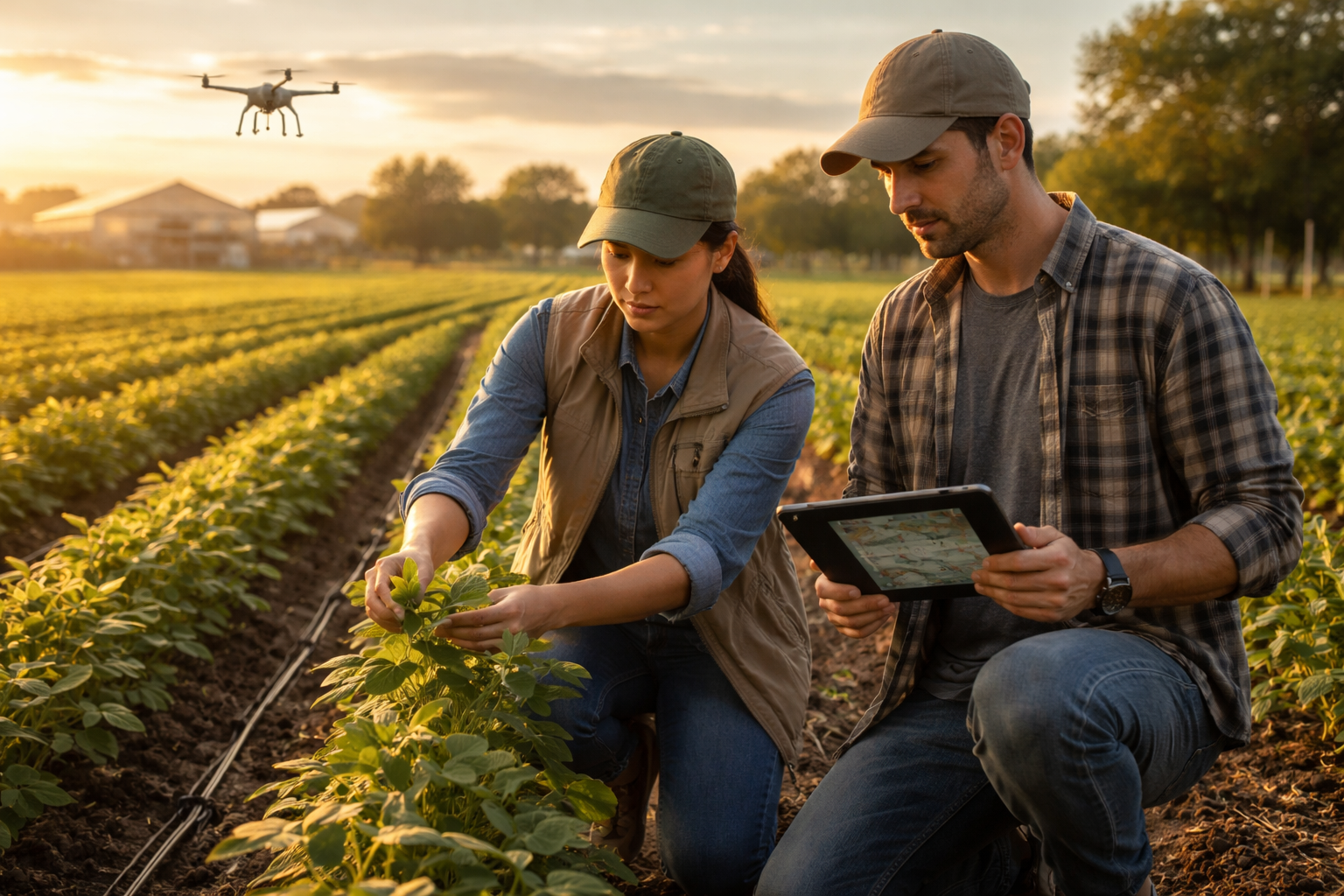
Drones, sensors, imaging, automation, and decision support tools make research more actionable at the farm, ranch, and supply-chain level.
This layout mirrors a modern agricultural site experience, but the content is built to answer keyword intent more directly than a standard institutional overview page.

Better crops are not only about yield. They are about performance under weather stress, disease pressure, market expectations, and soil constraints.
Read insight →
Imaging, mapping, sensors, and remote scouting make it easier to translate science into faster, more targeted management choices.
Read insight →
Agricultural progress depends on both places: field plots show performance in practice, while laboratory work sharpens detection, imaging, and measurement.
Read insight →This page is designed to outperform a thin institutional overview by solving the reader’s real problem. It does not stop at “what the Agricultural Research Council is.” It explains what U.S. readers usually mean, where the equivalent work happens, and why the research matters on the ground.
These answers are written for search intent, readability, and featured-snippet potential without sounding robotic or stuffed with keywords.
Search results often surface South Africa’s Agricultural Research Council. In the United States, comparable roles are spread across USDA research agencies, NIFA-supported grant programs, and the land-grant university and extension network.
Agricultural research improves crop genetics, pest and disease response, animal production systems, soil and water management, food quality, engineering tools, and data-driven decision-making across the agricultural economy.
Farmers, ranchers, researchers, agribusinesses, food companies, students, policy teams, and consumers all benefit when agricultural science produces more resilient, efficient, and practical production systems.
Good follow-up searches include USDA Agricultural Research Service, USDA NIFA, AFRI grants, land-grant university agricultural programs, and your state cooperative extension service.

Itaque quidem optio quia voluptatibus dolorem dolor. Modi eum sed possimus accusantium. Quas repellat voluptatem officia numquam sint aspernatur voluptas. Esse et accusantium ut unde voluptas.
0 Comments
No approved comments yet. New submissions appear after moderation.